integratedk12.com

March 10, 2026

Uncategorized

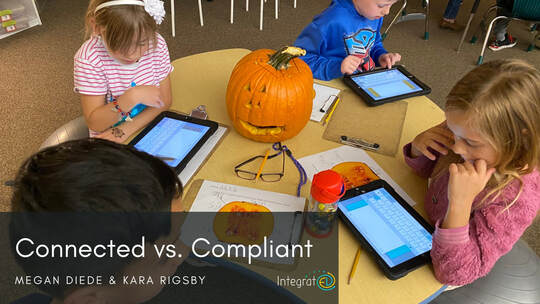
Connected VS Compliant

The Lesson That Sparked Change Have you ever found yourself teaching a lesson straight from the teacher’s guide, only to feel that something crucial was missing? You diligently follow every word, check every box, yet the room feels devoid of energy. The students stare blankly, the atmosphere is flat, and even you start to lose focus. We’ve all been there. This feeling of going through the motions is what led us to a profound realization about teaching and learning.Early in our careers, we relied heavily on scripts, pacing guides, and prescribed activities. We thought following the plan meant doing it right. But one day, I sat on my classroom carpet with my students, script in hand, and realized I was not even connecting to the words I was saying. If I felt that way, how could my students feel any differently? That moment sparked a dynamic for change. It taught us that compliance might fill time, but connection fuels learning. Why Connection Matters When teachers connect with the content, students feel the difference in each lesson. You can see it in their eyes, in their hands when they create, and in the way they lean forward with curiosity. Connection creates purpose, relevance, and long-term understanding. Compliance, on the other hand, leads to surface learning. It checks the boxes but misses the magic.We want students to see learning as something meaningful, not a to-do list of worksheets and assignments. Connection builds curiosity, ownership, and joy. When we teach with energy and passion, students mirror that energy right back to us. It is the same dynamic a great coach creates with a team; the more fun the coach has, the more engaged the players become.  ​What Keeps Teachers Stuck in Compliance We understand why many educators struggle to break out of compliance mode. The system often demands it. There are pacing guides to follow, standards to meet, and assessments to prepare for. Teachers feel pressure to “cover” everything, even when they know deep down that coverage does not equal mastery.There is also fear. What if we do it wrong? What if deviating from the plan brings criticism? Am I teaching what will be on “the standardized test?” That fear leads many educators to follow the script rather than their instincts. But compliance never ignites learning. Students can sense when a lesson lacks heart. If we want engagement, we must bring our authentic selves into the classroom. Make It Personal The first step toward connection is personal investment. Bring your life, your interests, and your stories into your teaching. Kara once invited her husband, a battalion chief, into her classroom during a unit on natural disasters. He shared real stories and tools from fighting wildfires, and the room came alive. Students who rarely spoke raised their hands with questions. They learned the content because it became real.Making it personal does not always mean bringing in guests. Sometimes it means sharing a passion for art, music, or science. Megan often uses visual arts to teach content. She connects her love for creativity with academic standards, and students respond with excitement and focus. When they see their teacher’s enthusiasm, they match it with their own. Integrate the Pathways of Learning Connection grows when students learn through multiple pathways of music, movement, storytelling, visual arts, technology, hands-on exploration, and auditory experiences. Every student learns differently, and these pathways open doors that traditional methods may leave closed.If you love music, use it to introduce a concept. If movement energizes your class, let students act out vocabulary words or scientific processes. If storytelling draws you in, let it draw them in too. The goal is not to abandon the curriculum but to make it come alive through experiences that feel natural to you and your learners.    Reframe the Curriculum The curriculum is a guide, not a rulebook. Standards show us what students need to learn, but they do not dictate how we teach it. When you reframe the curriculum as a launchpad instead of a cage, you gain creative freedom. Ask yourself, “What is the goal of this lesson? How can I reach it in a way that fits my students and my teaching style?” This freedom to reframe the curriculum should empower and liberate you as an educator.Use the text, the materials, and the pacing if they serve you. But give yourself permission to adapt, to play, and to connect. The result will not only be higher engagement but also deeper understanding. Empower Students with Voice and Choice Students also need space to connect. Give them options for how they demonstrate understanding. Let them choose whether to create a video, perform a short presentation, or design something visual. Provide moments for reflection so they can ask, “Why does this matter to me?” When students see their voice in the process, they move from passive participants to active learners. A Challenge for Every Educator We challenge you to pick one upcoming lesson and ask: “Where can I add my voice, my students’ voice, and a pathway to connection?” Try something new this week. Use a learning pathway. Bring your personality into the classroom. Observe what changes in your energy, in your students’ engagement, and in the overall atmosphere.Compliance may keep things quiet, but connection creates the kind of noise that means learning is alive. When students laugh, move, question, and create, you know they are not just following directions, they are growing. That is the classroom we all want, and it begins when we choose connection over compliance.​The choice is ours, Kara and Megan ElevatED Educator Elevated Educator offers educators, curriculum directors, and administrators a practical and inspiring guide to transforming classroom instruction into purposeful learning experiences. Built on the foundation of the Seven Pathways of Learning, this book helps teachers engage every type of learner through movement, music, storytelling, technology, hands-on exploration, and the arts. Rather than relying on scripted lessons or traditional approaches, Elevated Educator shows how to take an existing curriculum and elevate it into
Uncategorized

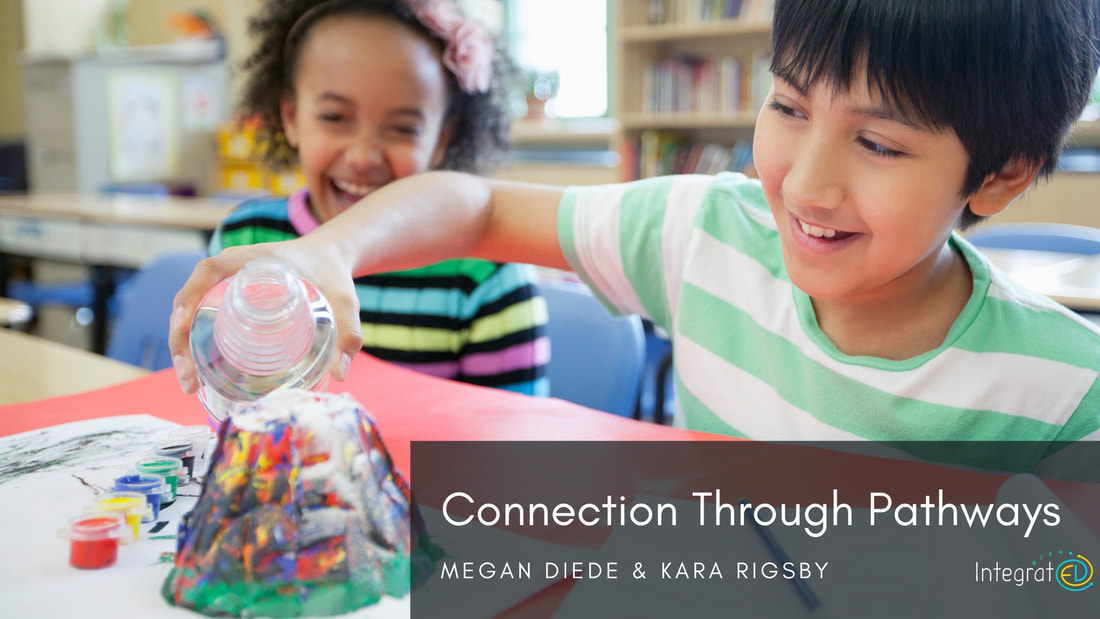
Connection Through Pathways

Moving from Compliance to Connection ​As educators, we know the difference between teaching from a script and teaching from the heart. When we connect with what we teach, our students feel it. The classroom energy shifts. Curiosity grows. Learning feels alive. That is why we have been focusing on the power of connection between students and the content itself. Authentic learning does not come from compliance; it comes from engagement. And one of the most powerful ways to create that engagement is through learning pathways. What Are Learning Pathways? Learning pathways are multimodal ways to help students access information and make meaning in different ways. The seven pathways (technology, music, movement, auditory, storytelling, hands-on, and visual arts) invite learners to interact with content through diverse entry points. When we design lessons that include these approaches, we see students of all learning styles engage with purpose. Pathways increase participation, naturally differentiate instruction, and create deeper understanding. They transform the classroom from a space of quiet compliance to one of creativity and connection. Strong Foundations through Tier One Instruction We often remind teachers that strong Tier One instruction is the best intervention. It sets the foundation for every learner to access content successfully. By integrating pathways into Tier One instruction, we meet diverse needs without adding more work. This approach is not an extra task on a teacher’s plate; it replaces less effective strategies with purposeful, engaging experiences. Instead of worksheets or fill-in-the-blank exercises, students build, perform, move, and create. That shift not only improves comprehension but also builds ownership and pride in their learning. Making Learning Meaningful through Pathways Let’s take music as an example. For younger students, teachers might create a simple song or rhythm to teach a concept. In upper grades, students can take ownership by writing their own lyrics or performing a rap that explains key ideas. They may resist at first, but when they see your excitement and willingness to join in, they follow your lead. Add a set of pool noodles for rhythm, and suddenly, a vocabulary lesson becomes a full performance. The laughter, rhythm, and movement turn content into memory.For visual learners, the visual arts pathway creates similar results. Imagine students illustrating a scientific process or designing artwork that represents historical events. The room might look messy for a while, but the depth of understanding is worth it. When students express knowledge through color, texture, and creativity, they connect to the material in ways that paper tasks never allow. The key is to give them time and space to create. Step back, let them explore, and resist the urge to correct. The ownership that follows is authentic and lasting. Purposeful, Not Additional We always tell teachers: if it is not purposeful, do not do it. Pathways are not add-ons; they are replacements for less meaningful tasks. They transform lessons without adding time or stress. Every teacher can integrate them by starting small with one standard, one pathway. From there, the energy in the classroom begins to shift. Students become more engaged, behaviors improve, and teachers rediscover the joy of teaching. Connection Creates Lasting Learning At the end of the day, connection is what makes learning stick. When students sing, move, build, tell stories, or create art, they do not just memorize content; they live it. They see themselves in the process, and that connection builds confidence, curiosity, and love for learning. As educators, that is the goal: not just to teach content but to light a spark that keeps students learning long after they leave our classrooms. Building connection through pathways reminds us why we teach. It reenergizes our classrooms and helps every student find a meaningful way in. So this week, choose one pathway. Try something new. Watch the magic happen when compliance fades and genuine connection takes its place. ​You got this, Kara and Megan Pathways to Possibilities: Unlocking Every Student’s Potential Tired of teaching the same lesson three different ways and still watching some students miss the mark? In this lively and interactive professional development session, we will demonstrate multiple pathways of learning, an approach that proves there is more than one road to student success. Think music, movement, visual arts, storytelling, and hands-on strategies that meet learners where they are and push them further than you imagined. You will gain practical ideas you can plug into your classroom immediately, plus a renewed excitement for reaching every student, even the hard-to-reach ones. Come ready to laugh, learn, and discover how many doors you can open when you stop relying on just one pathway.​Are you ready to create purposeful, engaging learning experiences in your school? Let’s connect. Together, we can help your educators thrive.   Connect with Megan and Kara Connection to Content ​Educators, curriculum directors, and administrators can bring new energy to their classrooms by downloading Connection to Content: Making Learning Stick Through Pathways, a free resource from IntegratED. This guide provides a clear and practical framework for helping students connect deeply with the content, not just complete tasks. Through seven powerful learning pathways (technology, music, movement, storytelling, auditory, hands-on, and visual arts), teachers can design lessons that reach every learner in meaningful and memorable ways. Each pathway encourages natural differentiation, creativity, and curiosity, ensuring that all students find an entry point into learning. With step-by-step guidance, examples, and reflection questions, this resource makes it simple to start small and see immediate results.​This free download is more than a planning tool; it is an invitation to reimagine how learning happens. By using pathways to connect students with content, teachers move beyond surface participation to genuine engagement and understanding. The resource helps educators design lessons that stick by allowing students to experience, explore, and express learning in multiple ways. When learning becomes purposeful and personal, students build confidence, retain knowledge longer, and rediscover the joy of discovery. Don’t miss the chance to transform your instruction and inspire your students to connect with content like never before. Download Connection to Content today and start making learning

Uncategorized

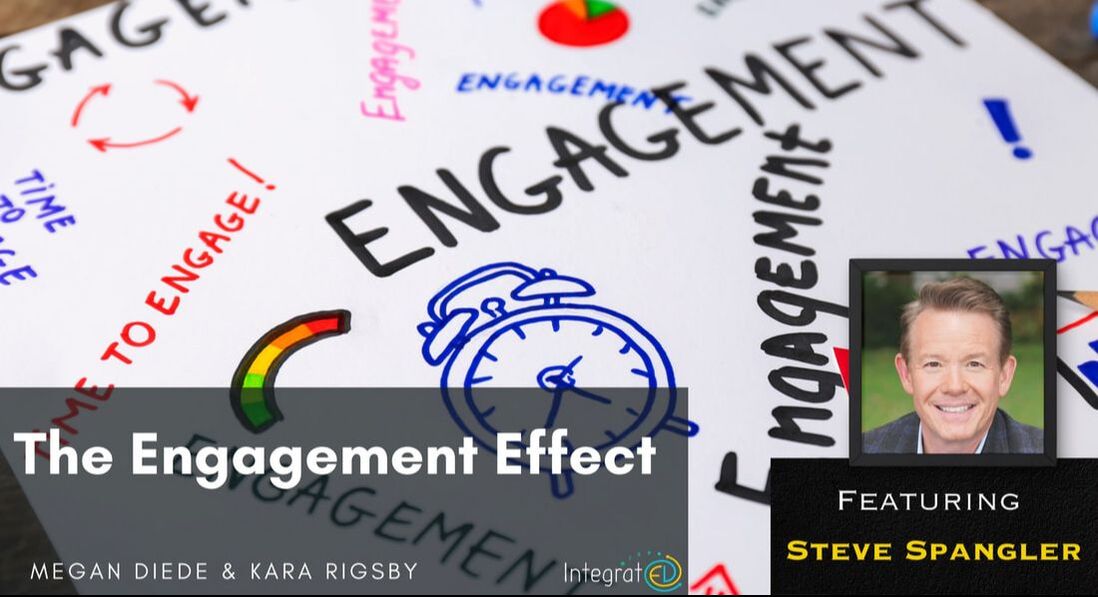
The Engagement Effect

Step right into the energy of one of the most electric conversations we have ever had on our podcast. When Megan and I sat down with Steve Spangler, the engagement guy himself, I knew we were in for something big, but nothing prepared me for the moment he spun a cup of coffee on a wooden board right there on screen. I should have known the interview would feel more like a magic show than a typical conversation. That was Steve’s point. Surprise wakes up the brain. It signals curiosity. It invites connection. And for him, that spark is the heart of what he calls the Engagement Effect. So what is this Engagement Effect? Why does it matter so much in our classrooms? How does it connect to IntegratED’s seven learning pathways? Let me walk you through what we learned, laughed, and walked away more inspired than ever. Designing Experiences That Lead to Genuine Connection Steve made it clear right away that engagement is not a gimmick. It is not a bag of tricks. It is not a scripted sequence of steps. Instead, he described it as an invitation. Despite his magician’s heart, his goal is not to entertain for the sake of entertainment. His goal is to shift how learners see, feel, and understand something.He told a story about trying to perform his famous flaming wallet trick at a hotel. He lit it. The fire flashed. And the woman at the counter simply stared at him. No reaction. No laugh. No spark. He admitted later that the problem was not the audience. It was him. He rushed. He filled all the space with his words. There was no room for the other person to engage.Listening to him, I found myself nodding. How many times do we as teachers overtalk, overexplain, or overcontrol a moment that needs breathing room? Connection happens when we stop performing and start inviting. When we pause. When we let students join the experience.​That pause is the invitation. That is where connection begins. Engagement Through the Seven Pathways When Steve talks about engagement, it lines up beautifully with our seven pathways of learning. Pathways create entry points. They allow students to lean in, listen closely, care deeply, and take meaningful action. Steve described engagement as a two-way street. Students need a role. They need ownership. They need space to express understanding in their own way. This is exactly why pathways matter so much. Each pathway gives students a different kind of invitation. Music creates rhythm and emotion. Movement unlocks energy and kinesthetic understanding. Visual arts open creative expression. Storytelling connects content to lived experience. Technology adds creation and exploration. Hands-on experiences require curiosity and experimentation. Auditory learning strengthens listening, sharing, and oral expression. Steve’s entire philosophy mirrors this. He shared stories of magicians, jazz musicians, teachers, and custodians who each carried a unique spark. He reminded us that engagement shows up differently for every learner. Some students lean forward. Some whisper to a partner. Some begin to move. Some light up quietly from the back of the room. Learning pathways honor all of these responses. We cannot create engagement by force. We create it by offering multiple ways in.     Why the Engagement Effect Matters More Than Ever Every educator I know feels the strain of limited time, heavy expectations, and pressure to “get through content.” Steve said something that hit me hard. He said the most precious commodity in teaching is time, not money. We cannot waste time on meaningless tasks. We cannot wait for engagement to magically appear. And we cannot laminate last year’s lesson plans and expect them to fit this year’s students. Students today crave relevance, connection, and authenticity. They respond when teachers show energy, vulnerability, curiosity, or humor. Steve joked that teachers have a superpower we often forget. We change lives by accident. Something small we say or do sticks with a student for decades. Engagement lays the foundation for those moments. The Engagement Effect matters now more than ever. When we design experiences that invite students to think differently, move, act, and feel, we create the spark that transforms classrooms. It reduces behavior issues, increases trust, builds classroom culture, and reminds us why we teach. This transformative power of engagement is what keeps us inspired and motivated. We left the conversation with Steve believing more strongly than ever that engagement is not a trick. It is a mindset. It is a way of seeing students. It is a commitment to meaningful pathways. And it is a promise that learning should never feel flat or forgettable. It is in these meaningful learning experiences that we find our purpose and fulfillment as educators. It is the notes in between that make the song. In teaching, those notes are the moments of connection.​Let’s create more of them. Are you ready to experience The Engagement Effect? ​ It’s time to transform your teaching and your students’ learning.​Steve Spangler’s newest book, The Engagement Effect, is the resource every educator and administrator needs right now. In a time when attention feels scattered and classrooms often struggle to connect, this book offers a practical and inspiring roadmap for creating learning that students truly feel. Steve reveals the science behind curiosity, the power of shared experiences, and the simple shifts that can transform passive compliance into active engagement. If you want students who lean forward, participate with purpose, and carry their learning beyond the lesson, his approach will show you exactly how to make that happen. What sets this book apart is Steve’s ability to blend research with real stories from decades of educational leadership and innovation. He explains how to capture attention in the first fifteen seconds, use humor and authenticity to build trust, and design experiences that spark emotional and intellectual connection. You will walk away with a deeper understanding of how engagement shapes classroom culture. It is a blueprint for creating moments that matter. Educators and administrators who want to strengthen relationships, elevate instruction, and cultivate genuine curiosity in their schools will find this book invaluable. The Engagement Effect gives you the tools to

Scroll to Top