integratedk12.com

Author name: Meg & Kara

Uncategorized

Elevated Educator: Elevating Student growth & engagment

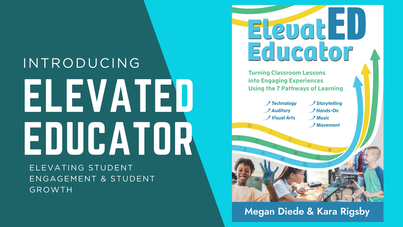
A year in the making, and it is finally here! We are thrilled to announce the release of our first book, ElevatED Educator: Turning Classroom Lessons into Engaging Experiences Using the 7 Pathways of Learning. This book is a transformative guide that equips educators with actionable strategies to turn traditional lessons into dynamic, immersive learning experiences grounded in the IntegratED learning pathways and includes narratives of proven classroom success. Designed for educators who want to reach students through multiple learning pathways, this book is backed by our proven field studies and multiple years of hands-on classroom experience. The Core Message ElevatED Educator is about revolutionizing how we teach. It focuses on turning everyday lessons into engaging, experience-driven learning using the 7 Pathways of Learning. Traditional teaching methods can fail to meet the diverse needs of today’s students. Too often, teachers find themselves stuck in a cycle of lecturing, worksheets, and assessments in a “sit and get” situation, only to see disengaged students who struggle to retain information. This book presents an alternative: a way to break free from conventional methods by integrating hands-on, student-centered strategies to create lasting impact. Each chapter provides step-by-step guidance, practical tools, and real-world examples that teachers can apply immediately in their classrooms. These strategies are tested techniques implemented successfully in classrooms nationwide. Students do not learn in just one way. By tapping into these pathways, teachers can create differentiated learning experiences that make lessons more accessible and engaging for every student. Our method ensures that every student can connect with the material in a way that resonates with them, rather than a one-size-fits-all approach. Real Classroom Impact These strategies transformed our classrooms. Educators who implemented these techniques from our keynotes and professional development sessions report back with increased student engagement, stronger classroom communities, and a renewed sense of joy in their work. By expanding how we teach, we unlock student potential in incredible ways. Learning pathways benefit students and reignite passion for teaching. Teachers who have implemented these strategies shared increased student engagement, stronger classroom communities, and a renewed sense of joy in their work. Why Educators Need This Book Teachers today face numerous challenges—disengaged students, limited time, and the pressure to differentiate instruction for diverse learners. Many educators feel overwhelmed by the expectation to create meaningful, interactive lessons without any additional support or resources. ElevatED Educator offers a solution. This book provides educators with actionable strategies that can be easily implemented, saving time and reducing the stress of lesson planning. With over 80 practical ideas, teachers will have a toolkit of ready-to-use techniques to elevate their teaching without adding extra workload. The Climate and Culture Connection ​A positive classroom climate is essential for student success, and ElevatED Educator provides the tools to create an engaging, supportive learning environment. By implementing the 7 Pathways of Learning, educators can foster a culture of curiosity, collaboration, and inclusivity. These strategies encourage students to actively participate in their education, building confidence and a sense of ownership over their learning. When students feel seen, heard, and valued through diverse teaching approaches, they develop stronger relationships with their teachers and peers, leading to a more cohesive and respectful classroom community. Order Details This book is a movement toward transforming education. Order your copy today and join the conversation. Follow our journey on social media, share your thoughts using #ElevatEDeducator, and connect with other educators ready to make learning more meaningful. Orders are now open through Youth Light Publishing, Amazon, and IntegratedK12.com. Bulk orders are available for schools and districts looking to implement these strategies on a larger scale. order now In addition to the book, IntegratED provides professional development opportunities for school districts looking to implement the Pathways of Learning on a larger scale.  Book bundles for participants are available with our keynote or professional development bookings. ​ pd opportunities We help educators bring these strategies to life in their classrooms through hands-on workshops, training sessions, and ongoing support. Our tailored professional development ensures that teachers feel confident and equipped to create engaging, student-centered learning experiences that lead to lasting academic success.   Let’s Think Different Together, ​Meg and Kara https://www.youtube.com/watch?v=GDeIiPxt9VU&t=3s
Uncategorized

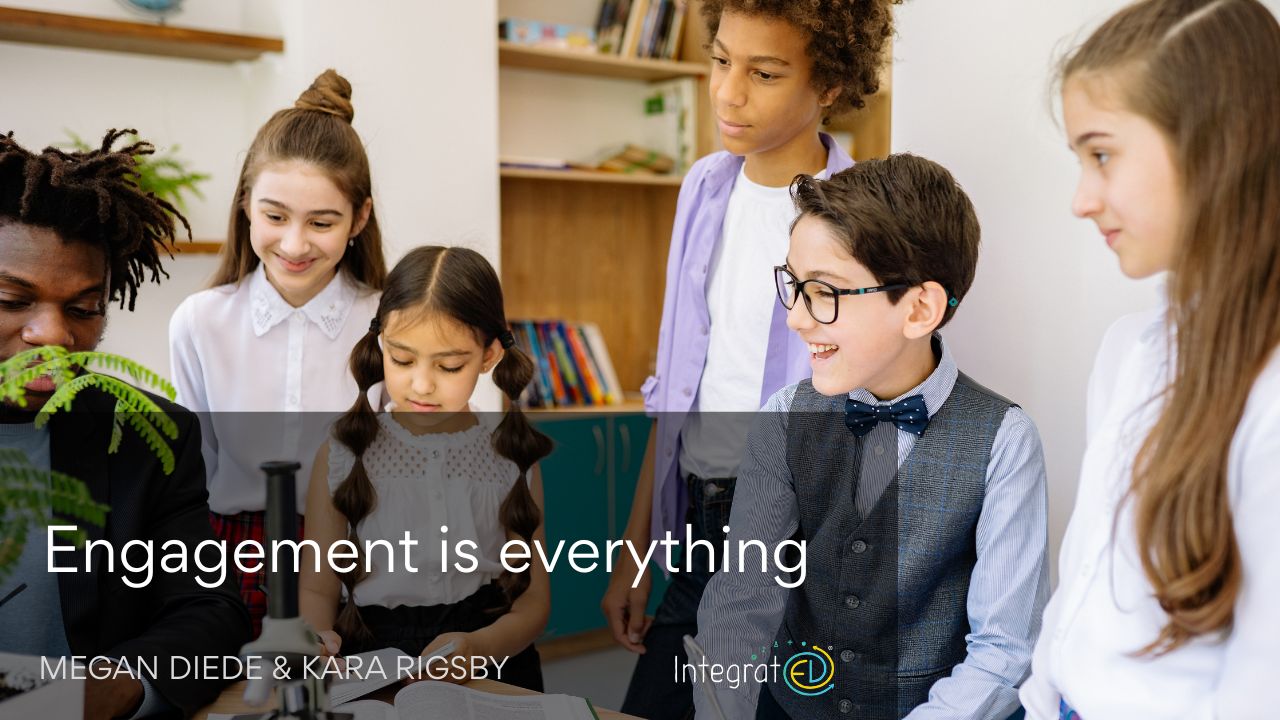
Engagement is everything

When it comes to education, the magic lies in engagement. As an educator, I (Meg) always believed that our role is more than imparting knowledge—it’s about sparking curiosity, inspiring creativity, and creating experiences that students carry with them long after the bell rings. Yet, many of us have faced moments where lessons fell flat or students seemed disconnected. The question is: How do we bridge the gap between content and meaningful connection?   It all started for us when we began dissecting our teaching approach. We asked ourselves why some lessons resonated while others didn’t. This reflection led to a powerful realization: teaching isn’t just about what you know—it’s about how you present it. That epiphany became the foundation of IntegratED: don’t just teach a lesson; create an experience.  Turning Lessons into Experiences  ​ Think about it. Dave is absolutely correct. Which sticks with a student longer: a lecture about Prohibition or a simulated speakeasy where they step into the 1920s and engage with the material firsthand? Experiences like these transform abstract concepts into tangible memories. Students may forget the specifics of a lesson, but they’ll never forget how they felt when learning it.   Creating experiences doesn’t have to be extravagant. It’s about weaving creativity and relevance into your content. The key is to make lessons come alive—to present material in a way that sparks curiosity and makes students eager to engage.  The Triple Venn Diagram of Teaching  ​ Dave’s approach involves three interconnected circles: content, techniques and methods, and presentation. Most educators are well-versed in the first two. We know our subject matter and have a toolbox of teaching strategies. But the third circle—presentation—is often overlooked.   Presentation is where the magic happens. It’s about delivering the material in a way that captivates students. It’s asking yourself: *How do I make this relevant? How do I make it engaging? How can I draw my students in, almost magnetically, to what I’m teaching?*   For instance, when teaching complex or abstract concepts, focus on making the material relatable and accessible. Hands-on activities, storytelling, and real-world applications breathe life into even the most challenging topics.  Why Engagement Matters  ​ One of the most common questions students ask is, “Why do I need to know this?” This question can make teachers cringe, but it’s also incredibly valid. After all, isn’t that what we ask ourselves during professional development sessions? If we can’t answer this question for our students, we risk losing their interest entirely.   Relevance is key. Show students how the material connects to their lives, interests, and futures. When students see the purpose behind their learning, their engagement soars.  Embracing Creativity  ​ Many educators express frustration that rigid curricula stifle their creativity. While it’s true that we face constraints, creativity is something we must actively reclaim. It takes courage to step outside the box, to try new methods, and to face potential criticism. But teaching in the most powerful way possible for our students is worth it.   Kara and I encourage teachers to bring their authentic selves into the classroom. Your passion, creativity, and willingness to take risks inspire students more than you realize. If you’re in a funk or feeling creatively drained, start small. Experiment with one new idea, tweak a familiar lesson, or collaborate with colleagues to brainstorm fresh approaches.   Remember, growth comes from discomfort. You must step out of your comfort zone to evolve as an educator.   Pushback and Progress  ​ Teachers often hear concerns that creating engaging lessons might not prepare students for the “real world” or that it might detract from test preparation. But let’s challenge those assumptions. Does making learning enjoyable now hinder a student’s ability to face challenges later? Absolutely not. Engaged learners become lifelong learners, better equipped to tackle future obstacles.   As for test scores, engagement and academic success go hand in hand. Students who are interested and invested in their learning perform better. After all, it doesn’t matter how brilliant your lesson is if no one’s listening.  A Call to Action  ​ At its core, engagement is about connection. It’s about meeting students where they are and guiding them toward where they can be. It’s about evolving with our students and embracing the ever-changing landscape of education.   So, to our fellow educators, take risks. Be bold. Create experiences that make your classroom a place where students feel seen, heard, and inspired. Let’s push the boundaries of what’s possible in education and, in doing so, reignite our passion for teaching.   Because when we teach with heart, purpose, and creativity, we don’t just educate—we transform lives. And isn’t that why we became educators in the first place?     Let’s Think Different Together, Meg and Kara https://youtu.be/3YaXxvOK6dk

Uncategorized

Passion Meets purpose

Our Story: The Journey of IntegratED ​Hey, fellow educators! We’ve hit the four-year mark, which has us reflecting on how it all began, the challenges and triumphs, and the exciting plans we have for the future. So grab a coffee, and let’s dive into how passion met purpose in creating IntegratED. The Humble Beginnings You might wonder, “How did this whole idea come about?” When Meg and I worked closely with the University of Wyoming, we found ourselves diving into curriculum creation—Meg for second grade and me for first grade. We weren’t just adding another task to the list; we were really digging into the standards, figuring out how to integrate new content meaningfully into our classrooms.​Working on this curriculum was eye-opening. We gained valuable skills in curriculum design and a deeper understanding of educational standards. It felt more than just a project; it was a purpose-driven task. But we knew adding “one more thing” to an already-packed teacher workload could feel overwhelming. So, we started brainstorming ways to make it easy, adaptable, and impactful for fellow educators in the classroom. An Invitation That Changed Everything Our journey took a monumental turn when we were nominated for a Teacher Leadership Academy in Houston, Texas. We couldn’t believe it! We thought, “Two teachers from Wyoming? No way!” But we were invited. This experience was transformative. It wasn’t just the professional growth, though that was incredible. We realized that we had something valuable to offer beyond our classrooms. We thought, “Could we be leaders, sharing our insights and making a real impact in education on a broader scale?” That question stuck with us, and IntegratED began to take shape. Building the Vision and Finding Our Name When we decided to make IntegratED a reality, we knew the heart of our mission: integrating resources and simplifying approaches for educators. Naming it, however, was another challenge! We went through endless sheets of paper with potential names, synonyms, and ideas. Finally, we landed on “IntegratED,” with the capital “ED” symbolizing education. But it was more than just a clever name; it represented how we envisioned our work—integrating skills, content, social-emotional tools, and strategies that support educators holistically.  And that little arrow in our logo? It’s not just a design choice. It stands for our commitment to continuous growth, moving forward, and helping others do the same. IntegratED is not just a service; it’s a mindset we hope to share with every educator we connect with. From Classroom to Conference Rooms Our first presentation was at a national Innovative Schools Conference in San Antonio, Texas. We felt on top of the world. Being on the River Walk and seeing even a small group of engaged attendees left us buzzing with excitement. That day, something clicked for both of us: we were hooked! We loved sharing what we’d learned, not just as content but as a passion to help other educators make fundamental changes in their classrooms. And here we are today, continuing to speak at conferences, lead trainings, and host virtual cohorts. Every opportunity to connect with fellow educators reaffirms our commitment to this work. It’s about making classrooms more engaging, effective, and supportive for students and teachers. Balancing It All: Our Integrated Lives People often ask us, “How do you manage it all?” Well, to be honest, it’s not just about professional balance but personal integration, too. We’re still in the classroom, teaching third-grade next door to each other. We both love greeting our students each morning—standing in the hallway with coffee, soaking in their smiles as they start their day. But our lives don’t stop there. We’re also wives and moms. Between us, we have seven kids, ranging from two to 15 years old. It’s a beautiful, chaotic juggle, and we wouldn’t have it any other way. The support systems around us—our families, husbands, and friends—play an enormous role in making this possible. Their support allows us to put our all into IntegratED, knowing that our families are there and cheering us on. Strong Teams: The Foundation of Success Through IntegratED, we’ve learned that teamwork isn’t just something we preach—it’s essential. Our team plays an indispensable role in everything we do. Together, we create, innovate, and support one another to deliver the best we can.  Working together as “yin and yang,” Meg and I bring different strengths to the table. It’s a unique dynamic that helps us tackle tasks more effectively. We complement each other’s styles, ensuring that every part of IntegratED is touched with insight and care. We want to bring that teamwork philosophy to other educators, too. Building strong teams in education is foundational to creating strong content, lesson plans, and, ultimately, strong instruction. Why Passion Meets Purpose Reflecting on the past four years, I see how our passion has guided us. IntegratED didn’t start as a grand plan; it was born from small, genuine steps—conversations during post-work runs, scribbled brainstorms, and the desire to make a difference. Each stage has been about pursuing our passion: improving education, one integrated idea at a time. Our work with IntegratED continues to be deeply fulfilling. Knowing that we can help fellow educators find ease and excitement in teaching is a feeling that never gets old. As we move forward, that little arrow in our logo serves as a reminder of our purpose. We’re here to help educators find meaning and joy in what they do, with tools that help them—and their students—thrive. So, here’s to passion meeting purpose, continued growth, and the incredible journey that is IntegratED. Thanks for being part of it with us! Let’s think different together, Kara and Meg Want to learn more about the IntegratED Cohort? The IntegratED cohort is a professional development program designed for educators who seek to enhance instructional practices with innovative, integrated strategies. Through hands-on training and collaborative sessions, participants learn how to create cohesive, standards-aligned lesson plans that bridge subjects and engage students on multiple levels. We provide resources and coaching to help teachers implement

Uncategorized

Where Will You Sail?

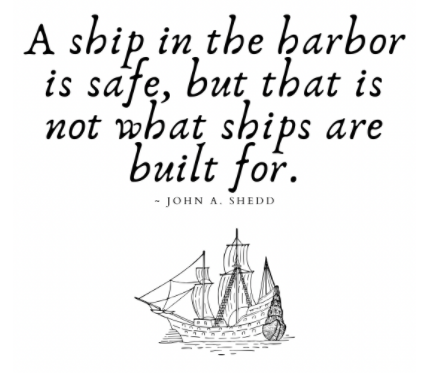
 “A ship in the harbor is safe, but that is not what ships are built for.”                                                                                                                               ~ John A. Shedd With graduation season in full swing, I have been reflecting a lot on this quote.  Graduation is a time of excitement for the future but is also a time that students can be anxious and fearful of what is to come.  The past thirteen years of their lives have had a repetitive pattern that becomes familiar and comforting. The students who they share classes with are more than just their friends, they have become a school family.  Leaving that familiarity can be hard.  But I want to encourage those graduates to set your sails and sail into what life has awaiting you.  The past thirteen years have prepared you for what your next adventure holds.  Trust that you absolutely have what it takes to start your journey of which you were built for.  Now, this message is not just for graduates, but for all of us.  As educators, mentors, parents, business owners, this is for us all.  Many of us have dreams and ambitions of something.  Often we get settled in life and those dreams and ambitions get put on the back burner.  But I am here to remind you that whatever you have been going through personally and professionally have prepared you to make those dreams and ambitions a reality.  You were built for great things.  Don’t stay in the harbor.   

Uncategorized

How Many Days Left?

A few tips on how to stay motivated until the end of the year. We have all been there. The countdown is on (8 days, 16 hours, 3 minutes, and 27 seconds….but who’s counting?)  Students are getting antsy and teachers are tired.  And the end of the year does not come without its own type of crazy. There are field days, celebrations, field trips, final projects, report cards, grades, paperwork, meetings, testing, testing, oh and did we mention testing?   With so much chaos happening around us, our focus can become skewed and our energy can start to wane.  How can we stay motivated to end the year strong?  How can we keep our energy up for our students and for ourselves?   Here are some things we have done/are doing to help keep us motivated and focused during the end of the year craziness! Student Motivation: Keep your routines!  Whether it’s your routines at home or your routines in your classroom, try to keep them as close to the same as possible.  It will help give students a sense of normalcy and it will help keep you centered as well!  Keep it FUN! Get students engaged and excited with adding some different elements into your daily routine! Games  Stations Themed Celebrations  Lessons Outside Bring in the arts (visual, music, dance) Keep it Moving!  It is the time of year that the weather is getting warmer.  Incorporating any type of movement into your lessons will help keep your students engaged and it will help get out some energy!  Teacher Motivation: Keep your routines!  Routines keep us centered and will help your days run smoothly, rather than just “winging it”. Try to stick to your routines in your classroom and in your personal life and the days will go more smoothly and quickly!  Keep it FUN!  Everyone at the end of the year just needs to have a little fun! Play a few games with your students, plan some outrageous celebrations for them (I mean , we all made it through 2020 AND 2021 teaching in a pandemic….let’s celebrate that!!!!).  Enjoy the last moments with your students and use the time to build memories and strengthen relationships.  Keep Caffeinated!  Every teacher needs their morning cup of goodness to help their day run smoothly. 🙂   Stay POSITIVE!  How many have ever noticed that by the end of the year it is not just students who are getting after one another, but teachers who are short with one another too?  This can be so draining.  Remember to stay positive with both staff and students.  The end of the year can be difficult and stressful.  We need to stay positive and build each other up!  We are all on the same team!   

Uncategorized

Teachers Make an Impact

In honor of Teacher Appreciation Week.  Thank you to all of the educators out there who do so much for students everywhere. ​ Megan: Most influential teacher….Mrs. Parks hands down! Mrs. Parks was my first grade teacher. She is one of the major reasons why I wanted to become a teacher. She made learning engaging and always did it with a smile on her face. As children, we do not remember the grades, we remember the relationship we had with our teachers and the experiences they created for us in the classroom.  My final year of college when it was time for me to be a student teacher, I was able to go back to that same classroom and teach alongside Mrs. Parks. As I began my journey into education she was finishing hers. She would be retiring that year. Watching Mrs. Parks teach her students from a teacher’s perspective was eye opening.  You could see the care she had for each and every student in her room and they responded to her with an eager to learn. I am now in my 11th year of teaching 2nd grade and am still in contact with Mrs. Parks. She will always hold a special place in my heart and in my classroom.  Kara: When thinking about influential teachers, I have been blessed to have many along my educational journey.  But there is one that sticks out in my memory as one who not only impacted my academics but my heart and the teacher I am today.  3rd Grade. Mrs. Miedema. Walking into her classroom felt like home.  It was a space where I felt safe and that no matter how I scored on a test or how well I performed on an assignment, I was always welcome. I was not what some teachers would qualify as the best student.  It took me a longer amount of time to catch onto concepts, especially in math.  She never once made me feel inferior to my classmates, but covered me in encouragement, support, and love.  Because of that, I strived to be better.  I didn’t want to disappoint her.  Her example has stayed with me, even all these years later (not going to say how many years 😉).  I strive to show that same encouragement, that same support and love to my students. I strive to be that kind of a teacher, not only because I know that is what is best for my students, but also because I know how much of an impact that can make on a student, even if it’s just one.    

Uncategorized

Poetry: Is it a lost art?

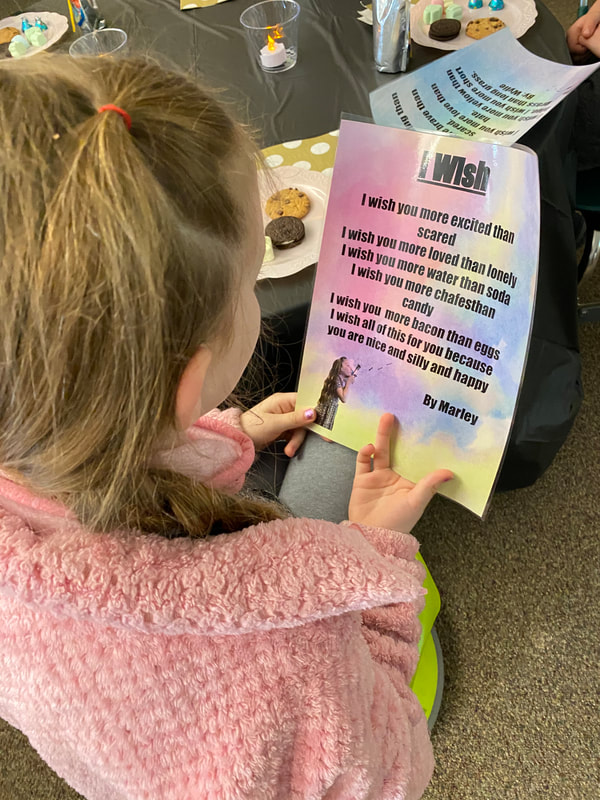
I remember sitting in class my senior year of high school listening to my teacher tell us how to understand the meaning of a poem. Something about the color red representing loss or being a color of evil. I wondered to myself, “If this is what teaching or learning poetry is all about, it’s not for me.”  Because of that poor experience, poetry hasn’t been my favorite thing to pick up and read. It certainly wasn’t something I wanted to teach.  For the last few years, I dabbled in teaching poetry to my class. I have to admit, I didn’t believe I was good at writing poetry so I didn’t really expect my students to be either. We wrote some acrostic poems or tried our hand at rhyming, but it wasn’t something purposeful or necessarily meaningful. It was more of a filler activity if we had time.  Then I took a master’s class in poetry. As a student, I experienced poetry in a new way and my mindset was shifted. I now view poetry as amazing! Ok…it might have had something to do with my professor and her love, passion, and viewpoint of this type of literature to get me interested but now I am HOOKED! Teachers are amazing that way. 😉 Here are some basics I took away about writing poetry. 1. It doesn’t have to rhyme. 2. You can write any way you want. You don’t want to capitalize a proper noun then don’t. 3. You are never wrong. This was a game-changer for me.  That next week I marched to our school library and checked out stacks of poetry books. I couldn’t wait to share these with my class. Each morning I would pick a poetry book, flip to a page, and start reading. Then, as a class, we would talk about what we liked about the poems. Did we like the style? Topic? The way the author wrote it on the page? By the end of the second day, I had students asking if we could write poems. My answer….of course! Before I sent students off to write, I modeled for them first how to get started.  (Modeling for students is good teaching practice, no matter the subject area!) I thought of a topic that I knew something about then I started to write phrases. I modeled for students to go back, to change, getting stuck in my thoughts, and finally be happy with my finished product. For the next week, students would get time in the morning to write poems. They wrote about sports, friends, family, colors, themselves, and so much more. Students learned about different types of poems like acrostic, Biographical poems, poems about using their senses, and narrative poems.      As a final project to showcase their learning, students listened to the book I Wish You More by Amy Krouse Rosenthal. This book was great text to introduce and teach students about synonyms and antonyms. Students created their own poems based on the work of Rosenthal. They used Google Slides to type their final drafts. Students loved the freedom to use different fonts and sizes. Next, students used PicCollage to create an image of them blowing a wish from a seeded dandelion. One student had the idea to put their wishes in small print and blow them away like the seeds. At the end of the week, we held a poetry reading for our students. Students walked in after lunch to candlelit tables with fancy plates filled with goodies to snack on as they enjoyed the reading of their peer’s poems. The best part was to teach students to snap instead of clap when one’s reading was finished.     After seeing the excitement in my classroom throughout this poetry unit, I am so excited to integrate this into our upcoming years, thinking of new ways to make it even more impactful. Students loved to share their poems and I learned so much more about them from their writings. Now keep in mind, we like to Integrate subjects, standards, and skills whenever we can.  We also like to spiral our learning and our teaching.  With that being said, we came up with a short list of different ways you could integrate poetry into your teaching. These are only a few ideas to help get your creative juices flowing!   Write a poem at the end of a science unit to solidify vocabulary and knowledge on the topic.  Use poetry to teach rhymes, antonyms, synonyms, similes, etc… Creative Writing – use poetry at the beginning of the year to get kids excited to write again (no grammar rules in poetry).  Bio Poems – build community and relationships at the beginning of the year (or anytime really). Non-Fiction Acrostic Poems – give facts or information about the topic (Ex. RAINFOREST – using those letters, students would give facts about the rainforest). Character/Author Acrostic Poems – do a character or author study and share information using this type of writing instead of a traditional “book report” type assignment. Color Poems or Senses – use to help teach nouns, verbs, adjectives throughout the year.  Story Problems 2.0 – have students create story problems for math – poetry style!  Students could have a lot of fun with this.  Christmas Lists – instead of students writing a traditional letter to Santa, have them put their list in the form of a type of poem! Mother’s Day – students can write a poem about their mom/important woman in their life.

Uncategorized

“Does Everyone Know What Time It Is? …. Tool Time!”

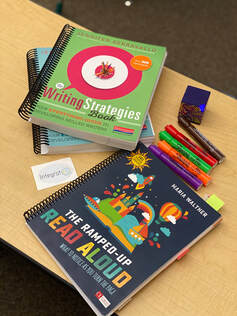
Anyone else remember the early 90’s sitcom, Home Improvement?  That was a weekly family event in our house, watching the new episode that came out.  And then after it stopped airing, every rerun that was shown.  I am pretty sure I could at least remember a snippet from every episode of that show.  But the one line that you heard on every episode, without fail… “Does everyone know what time it is?  Tool Time!”   Anyway … when thinking about what we wanted to share this week, we wanted to give you some concrete takeaways that you could implement tomorrow if you’d like.  So we decided that we would share our top ten tools.  Now, we aren’t going to share about tools that can fix your leaky faucet or wiggly table, but some tools that we find we use on a consistent basis in our classrooms, tools (both hands on and tech related) that we couldn’t teach without!   Now you know why that classic Home Improvement line kept popping up into my head! 😉 ​Top Ten Tools:  Music/Bluetooth Speaker: We use music all throughout our day! For moving our bodies, transitions, work time… you will hear music! The bluetooth speaker is a great way to enhance the music without having to go through the room’s sound system.  You can find cheap ones that will do the trick at almost anywhere.   Sharpie Chart Paper Markers: I know, I know….you’re thinking, “Markers…really?”  But hear us out! These markers are the BEST when creating anchor charts and visuals for your students.  We LOVE them!  We go through at least two packs of these markers every school year.  We promise… once you use them, you’ll understand why we put them on our top 10 list!  Google Suite: Our team lives in and loves the Google Suite!  We put our daily lessons plans and events on Google Calendar, share and organize resources through Google Drive, and create resources on Google Docs, Google Slides, and Google Drawings.  The Ramped Up Read Aloud by Maria Walther: This book is GOLD!  There are such great lesson ideas that range in age and skill level.  And the best part, it is all based upon a read aloud book! We use this book for inspiration in our unit planning and has definitely been a useful tool for us!  The Reading Strategies Book by Jennifer Serravallo: This book gives some amazing ideas on different ways to teach the skills and strategies specific to reading.  It ranges in grade and skill level.  We use this to help us plan whole group, small group, and individual instruction.  The Writing Strategies Book by Jennifer Serravallo:  Jen for the win again!  Similar to the Reading Strategies book, this book gives some great ideas on ways to deliver writing instruction.  It ranges in grade and skill level.  We use this to help us plan whole group, small group, and individual instruction.  Symbaloo: This is a website that allows you to create a grid of all the websites  that you use frequently.  We set this as our home page on our preferred internet browser.  Then when we open our internet browser when we start our day all of the daily websites we need are right there! When using Google Chrome, you can also “Pin” this site to stay up.  Apps: Book Creator, Epic, Flipgrid, Prodigy (There are more but we tried to limit ourselves! 🙂) Daily Drawers: We have purchased two sets of 3 drawer containers that we use to organize our daily supplies. Whether it is paper copies, read alouds, games, etc. we fill those daily drawers with whatever we may need. This also makes things easy for a sub if they have to come in unexpectedly.  IntegratED Unit Planner: We have developed a unit planner that helps us create engaging, effective, creative units throughout our year.  We love this planner to help keep us on track and organized for our long term planning and goals. (Coming soon for purchase!) *** None of this is for an ad! These are just some of the things we love that we wanted to share with you!

Uncategorized

10 Green Screen Ideas for the Classroom

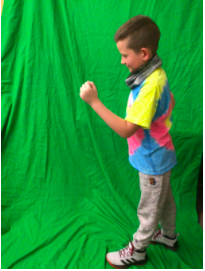
Too often we hear, “My students can’t do that! They are too little to make that work!” However, we are here to tell you that elementary students, even the primary age students (K-2), are capable of doing amazing things with technology.Green screen projects are a great way to integrate technology into your classroom, no matter the grade level! Here are some ideas that can be used as is or modified to fit whatever grade level or subject you teach. 1. Opinion Writing: After students have written an opinion piece, have them bring their writing to life! Students can record themselves reading their writing with images that correspond to their writing in the background.Students were writing their opinion pieces on if they would want to be a cave explorer! This project was integrating research on landforms (science), opinion writing, non-fiction reading skills and strategies, and technology. 2. Current Events:  News Report: Students can research and then report on current events, creating their own weekly or monthly news report. 3. Readers Theatre: In a guided reading or whole group setting, students can record their readers theatre performance, using green screen to increase their engagement and ownership of their performance.Getting ready to record on the green screen! A great activity to practice fluency and speaking and listening skills. 4. Informative Writing: Engage audiences by incorporating green screen images or video to showcase a research paper/project. Students will be more motivated and engaged while researching with this end project in mind!Animal research is always a hit with our students! It is a topic that is easily integrated into science, reading, writing, and technology! 5. Students teaching Students: This idea can be modified for so many things! One example would be for math. Students teach students different math problems by breaking them down step by step. The background is the math step/math problem. With this one being recorded and segmented, this one would have to be made into a video so an additional app would be needed to put the video together, such as iMovie. 6. Holiday Fun: Whether you are celebrating Christmas or Valentines Day students can use green screen to send personalized messages or showcase their favorite parts about those holidays. 7. Map It!: Using the subject of social studies and geography, students can showcase their knowledge of different countries, states, locations using those images in the background. 8. All About Me: Need a fun and engaging beginning of the year idea? Have students create an all about me green screen project! Students record themselves sharing their favorite things and a little about themselves. The background images are what they are sharing about in their video. With this one being recorded and segmented, this one would have to be made into a video so an additional app would be needed to put the video together, such as iMovie.  9. Alphabet Fun!: (K-1) Have students show their learning of the alphabet by recording the letters and a word associated with those letters. The background images are the words they are sharing! 10. Bringing Books to Life!: Whether you are working on a book report, reading strategies or skills, green screen is a great way to make books and those abstract skills more scaffolded and engaging to students. Using green screen to showcase student understanding of text is also a great way to differentiate for those students who have difficulty expressing their thoughts on paper. All the ideas listed above can also be done in one of two ways, using a green screen with still picture or video. There are many apps that will help in your green screen creation. A few apps that we use often in our elementary classroom for green screen projects are PicCollage, iMovie, and Green Screen by Do Ink (paid). There are many other apps that are available, these are just our current favorites. ● PicCollage : If you are looking for an app that has lots of options for creation and productivity, look no further! PicCollage is not just for inserting pictures. Students can create so many things using photos, video, cut outs, green screen pictures, various backgrounds, templates, grides, text…you name it. We like this app because it is easy for any age of student to use, as well as, it gives students choice and the opportunity to personalize their learning. Another amazing feature… this app is FREE! There are certain features within the app that you can pay to upgrade, but we have never had the need to do so.  ● iMovie: If you are an apple product user, we are sure you have heard of iMovie before. However, many are leary of using iMovie with students because they feel it can be too complicated or overwhelming. We are here to tell you that with modeling and some scaffolding, your students will be able to use and manipulate this app to create green screen magic! iMovie offers many editing and creation features when making a video. This app also has trailer templates that the students can drop their videos into, add text, and then they have their own green screen movie trailer! The iMovie app is also FREE!  ● Green Screen by Do Ink: This app is designed specifically for students to create using green screen images and video. The editing and creating of the video is a little simpler than iMovie and more user friendly for primary age students. You can add video, pictures, and there is even a live camera option on the app. There is also the option to add in additional elements to the video/photo. This app offers so many creative elements for students to make their green screen vision come to life! With just a little modeling on how to get started, our students were easily able to figure out the app and create some great content! We highly recommend this app, however, one this to keep in mind is that this is a paid app. One thing we have done in the past to help on cost is we paid to put it on some devices and then had students work in pairs

Uncategorized

Scissors, Glue Sticks, Crayons, Oh My!

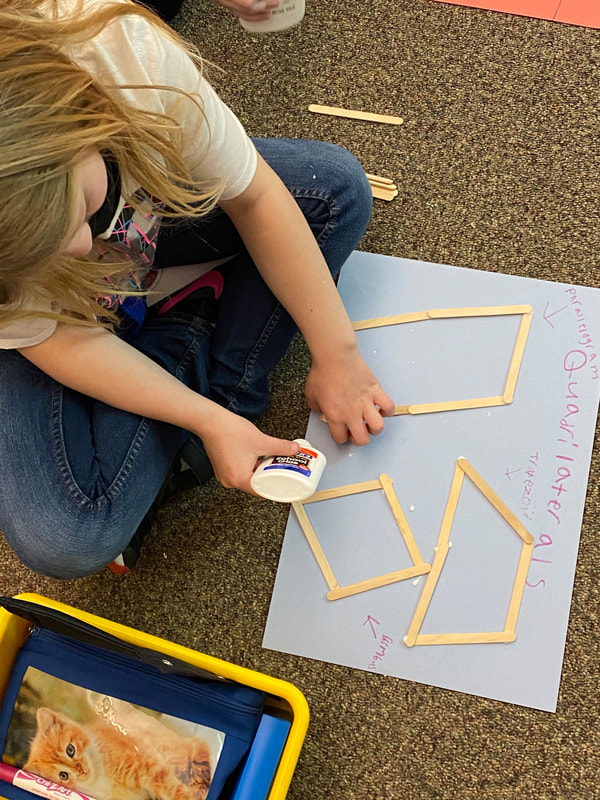
Do you ever have those moments when you take a second to stop and scan your classroom and you think,” Oofta! This place is a disaster!”  If you haven’t…. Please tell me your secret to keeping seven year olds tidy!  But if you’re like me, this scene is more of a daily occurrence. 🙂  From the very beginning of my career I have always believed that if the kids are the ones doing the work, they are the ones learning.  Now, I will tell you, that way of thinking does not always lend itself to Pinterest worthy bulletin boards and Facebook posts. I started teaching in kindergarten…need I say more?  But what it does leave you with is a classroom full of students proud of their work, students who are 100 times more sure of their work’s purpose and students who are gaining more understanding of the learning.     Just last week, my classroom, to one passing by, may have looked like a scene of utter chaos.  But to me and my students, we were in the learning zone!  Paper scapes were everywhere. Glue and popsicle sticks and construction paper scattered the floor.  Students’ discussion filled the room (along with a little music..because why not?).  It was a messy, loud, beautiful sight.  I overhear a table of students talking.  One student said, “Look at this mess!  We have stuff everywhere.”  The other student turned and said, “That’s okay!  We are getting a little messy, but we are learning and having fun! Right, Mrs. Rigsby!?”  Music to my ears!  If you are wanting Pinterest worthy, I can understand that.  There is a lot of pressure and eyes on us as educators that make us feel we need to live up to certain expectations.  But I would encourage you to examine the ‘Why” of you needing that picture perfect project.  Is the student at the center of that project and the learning?​So, will my classroom look like a tornado went through it on a daily basis… probably.  But there is beauty in that mess.  You just might have to dig down past all the construction paper and glue to see it. 🙂 

Scroll to Top